Sharing Multi-User Resources with Syncthing
Overview
This guide explains how to synchronize your multi-user resources folder across all machines using Syncthing.
Syncthing works both online and offline over a local LAN. This will also work to synchronize over separate networks if using Radmin.
1. Run Latest SightLab Installer with Syncthing
Run the SightLab exe installer again or request a new link here. This will install syncthing into a new folder at C:\wvlab\syncthing
Note: if installed with an older installer, install manually:
-
Download from https://syncthing.net
-
Run Syncthing once to generate a unique Device ID and initial configuration.
- Open the web GUI at
http://localhost:8384. - If installed from the SightLab installer, will run without the DOS window and should start automatically with Windows (added to the startup menu) and may run at
http://localhost:8384/
2. Choose a Primary Machine or Allow Both Send and Receive
-
If using a primary machine this will initially hold the master copy of your
Sharedfolder. -
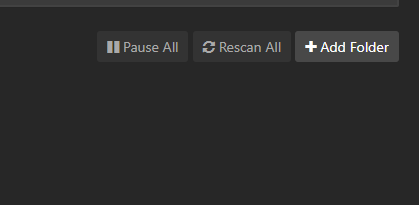
In Syncthing, click Add Folder. Do this once for SightLab and once for E-Learning Lab.
-
Folder Path: point to your
Sharedfolder.- For SightLab:
C:\Users\<username>\Documents\Sightlab2\Shared- For E-Learning Lab:
C:\Users\<username>\Documents\Sightlab2\ELearning\E-Learning Lab\shared -
Folder ID: use
shared-projectsfor SightLab ande-learningfor E-Learning Lab. -
Folder Label: optional display name.
-
Click Save.
3. Pair Devices
On Each Client Machine
- Open Syncthing’s web GUI (
http://127.0.0.1:8384). - Go to Actions → Show ID.
- Copy the long Device ID string (or scan the QR code if adding from another device), or just find the Device ID from the list that matches
- Get the Device ID from every machine you plan to pair before moving to the primary machine.
On the Primary Machine
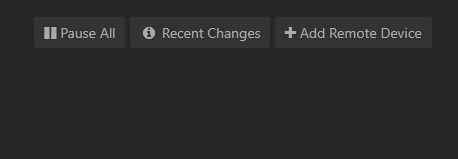
- In Syncthing, click Add Remote Device (bottom right)
-
Paste the client’s Device ID.
-
Name: give the device a clear name (e.g.,
VRClient1). - (Optional) Tick Introducer to have the primary automatically connect new devices to each other.
- Under Sharing, check which folders you want to share with this device (
shared-projectsand/ore-learning). Can also do this on this step, or in the next step. - Click Save.
Accept on the Client
- On the client, accept the connection request from the primary:
"Device
PrimaryMachineNamewants to connect."
- Click Add Device, give it a name, then Save.
Once both sides have accepted, the devices are paired and ready to share folders.
4. Share the Folder with Clients
On the Primary Machine
- Find the
shared-projects(SightLab) and/ore-learning(E-Learning Lab) folder in Syncthing’s folder list. - If you didn’t add it earlier, repeat Step 2 above.
- Click the Edit (pencil) icon next to it.
- Go to the Sharing tab and tick all the client devices that should receive this folder.
- Click Save.
- Repeat for the other folder if sharing both SightLab and E-Learning Lab.
On Each Client Machine
- Accept the folder share request from the primary:
“Device
PrimaryMachinewants to share folderresources.”
-
Click Add.
-
Choose the Folder Path where the synced copy should live.
-
This path should match what your SightLab scripts expect, e.g.:
C:\Users\<username>\Documents\Sightlab2\Projects\Shared -
Under Advanced click "Receive Only" on all the client machines (if not wanting to both send and receive).
-
Click Save.
5. After Setup
- Syncthing will automatically keep the
resourcesfolder in sync between the primary and all clients. - Any file added, edited, or deleted in the folder on one machine will be reflected on all others.
- If clients also have write access enabled, changes flow in both directions.
Workflow for Sharing
E-Learning Lab: Right-click any project you want to share and select Add to Shared. It will appear on the Shared tab for other machines. From there, users right-click to Import to Projects. Once everyone has received the project, it can be deleted from Shared.
SightLab: Place projects into the Shared folder. Users then copy them into their main Projects folder. Once everyone has a copy, the project can be deleted from Shared.
Running Locally
Go to Actions → Settings → Connections
Disable Global Discovery and NAT Traversal.
Keep Local Discovery enabled (fastest inside a LAN).
How to Ignore Sub Folders
To ignore sub-folders, in the web interface click Edit on the Shared Folder, then go to "Ignore Patterns". In the field enter the name of the folder with a forward slash (i.e. sightlab_configs/). There is also a .stignore file automatically added to the SightLab shared and E-Learning Lab folders.
Important notes:
- Use forward slashes (
/) even though it's a Windows path - Don't include the drive letter or the synced folder's full path
- End with
/to indicate it's a directory - The path is relative to whatever folder you've set up for syncing in Syncthing
Troubleshooting
GUI Not Opening in Browser
- If GUI not opening in browser (note this opens in a browser even if offline in LAN mode)
- Sometimes the GUI won’t auto-open, so try manually in your browser:
http://127.0.0.1:8384/ - If that still won’t load, something (firewall, antivirus, browser plugin) is blocking localhost connections.
Syncthing Not Starting
How to fix
-
Stop Syncthing completely (no tray icon, no background process).
-
Go to this folder:
C:\Users\username\AppData\Local\Syncthing\
Rename the database folder so Syncthing will rebuild it:
- Rename the database folder so Syncthing will rebuild it:
- Change
index-v2→index-v2.bak - Start Syncthing again.
It will create a brand-new index-v2 database and do a full rescan of your configured folders.
-
Your
config.xml(devices + folder definitions) is still there, so you don’t lose settings. -
Your files on disk are not touched — Syncthing just reindexes them.
-
The
.bakfolder is just a backup in case you ever need to restore.
Syncthing Not Syncing
If this happens, you may need to remove the folder on the receiving client (it won't delete the files), and the re-add it with the same path.
Extra Files Being Added with Conflicts
Sometimes *.sync-conflict-YYYYMMDD-HHMMSS-<DeviceID>.osgb files are created by Syncthing whenever two devices modified the same file before syncing.
- The original file (e.g.
Business_Office.OSGB) is still there. - The
*.sync-conflict…copy is Syncthing’s way of making sure you don’t lose either version.
Safe cleanup options:
- If you know which version is correct → open the files in Vizard/SightLab, confirm the “real” one, then delete the conflict files.
- If you don’t need the alternate copy → it’s safe to delete the
*.sync-conflict*files and keep only the base ones. - If you’re not sure → you can archive the conflicts somewhere else (e.g. a
conflicts/subfolder) before deleting, just in case.
How to prevent future conflicts:
- Try to designate one “writer” machine (e.g. your primary/host) and keep others read-only if possible.
- In Syncthing, you can set the folder type on clients to Receive Only if you don’t want them to push changes back.
-
See here for more information https://docs.syncthing.net/v2.0.0/users/foldertypes
-
If you need true two-way sync, conflicts can still happen, but they’ll be rare if only one person edits at a time.
✅ Bottom line: The .sync-conflict… files are not required for SightLab or Vizard to run — they are just duplicates for safety. Once you’ve confirmed you don’t need them, it’s safe to delete them.
Note:
Under Advanced click "Send Only" on the Primary Machine (if not wanting to both send and receive)